Finova Investor Digest
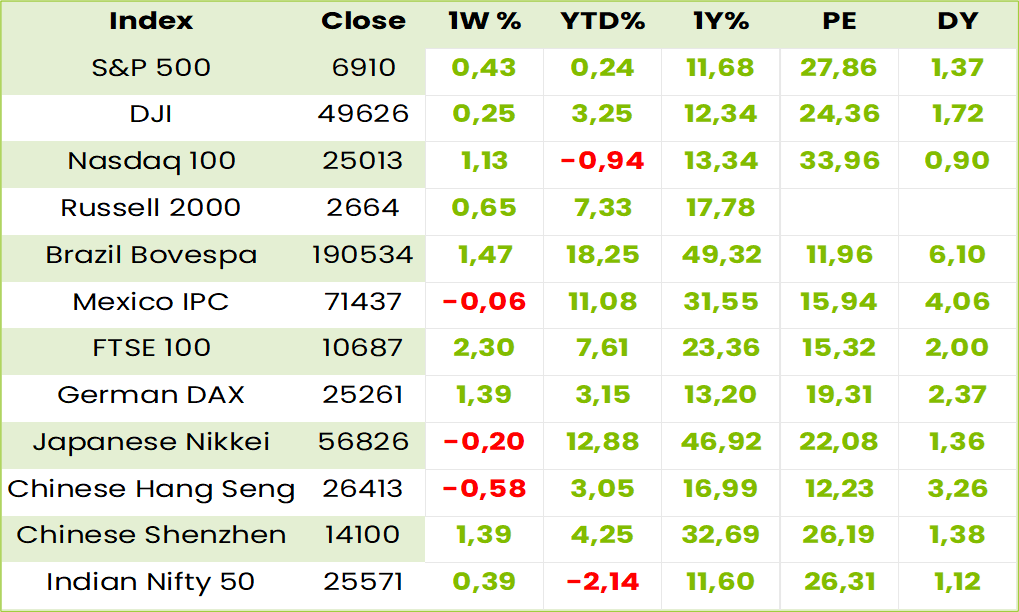
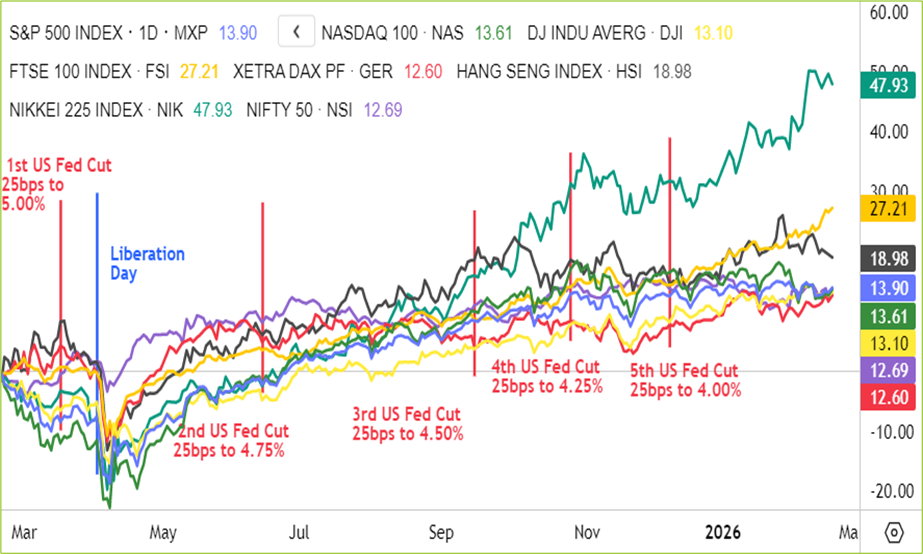
Global Indices
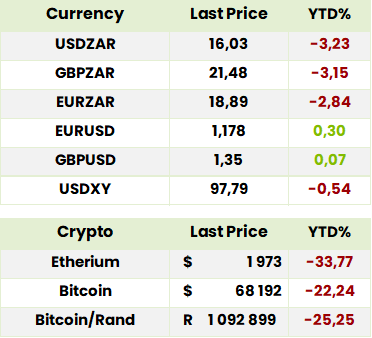
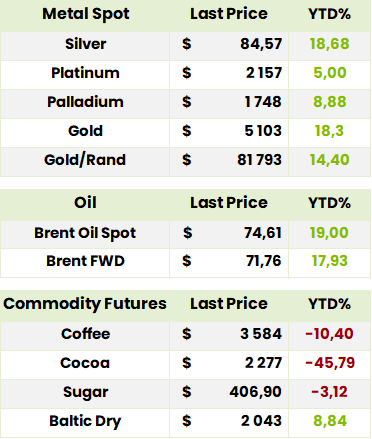
Currencies, Crypto & Commodities
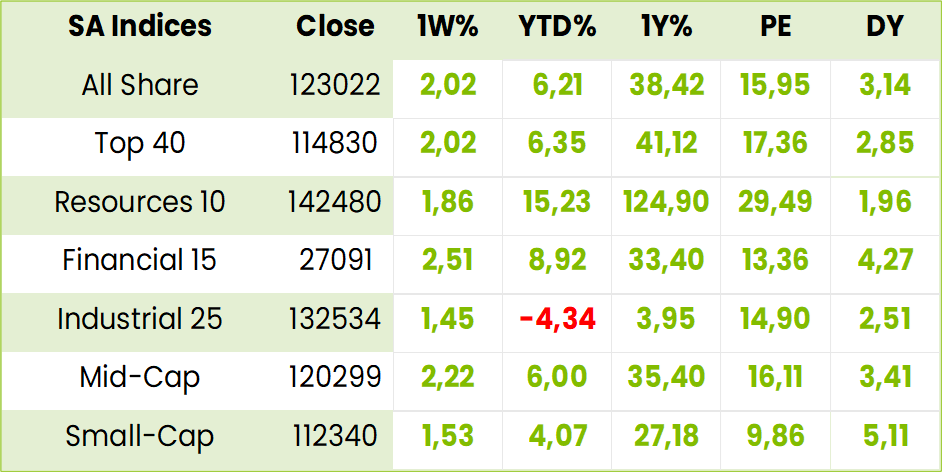
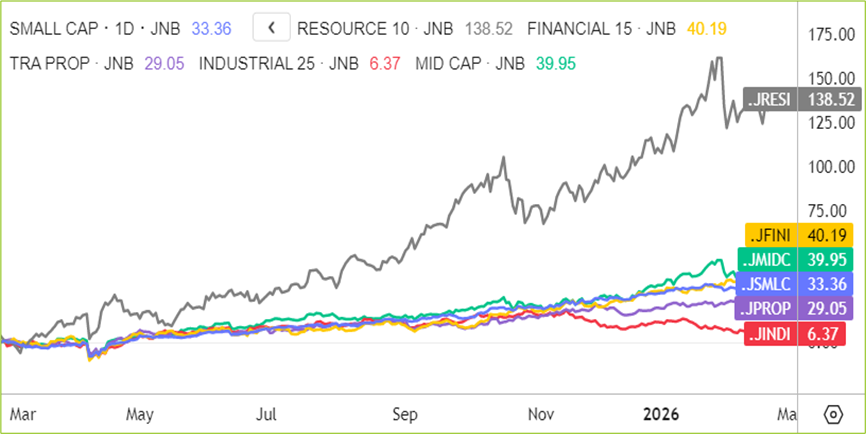
SA Indices
SA Upcoming Indicators & Dividends

SA Equity
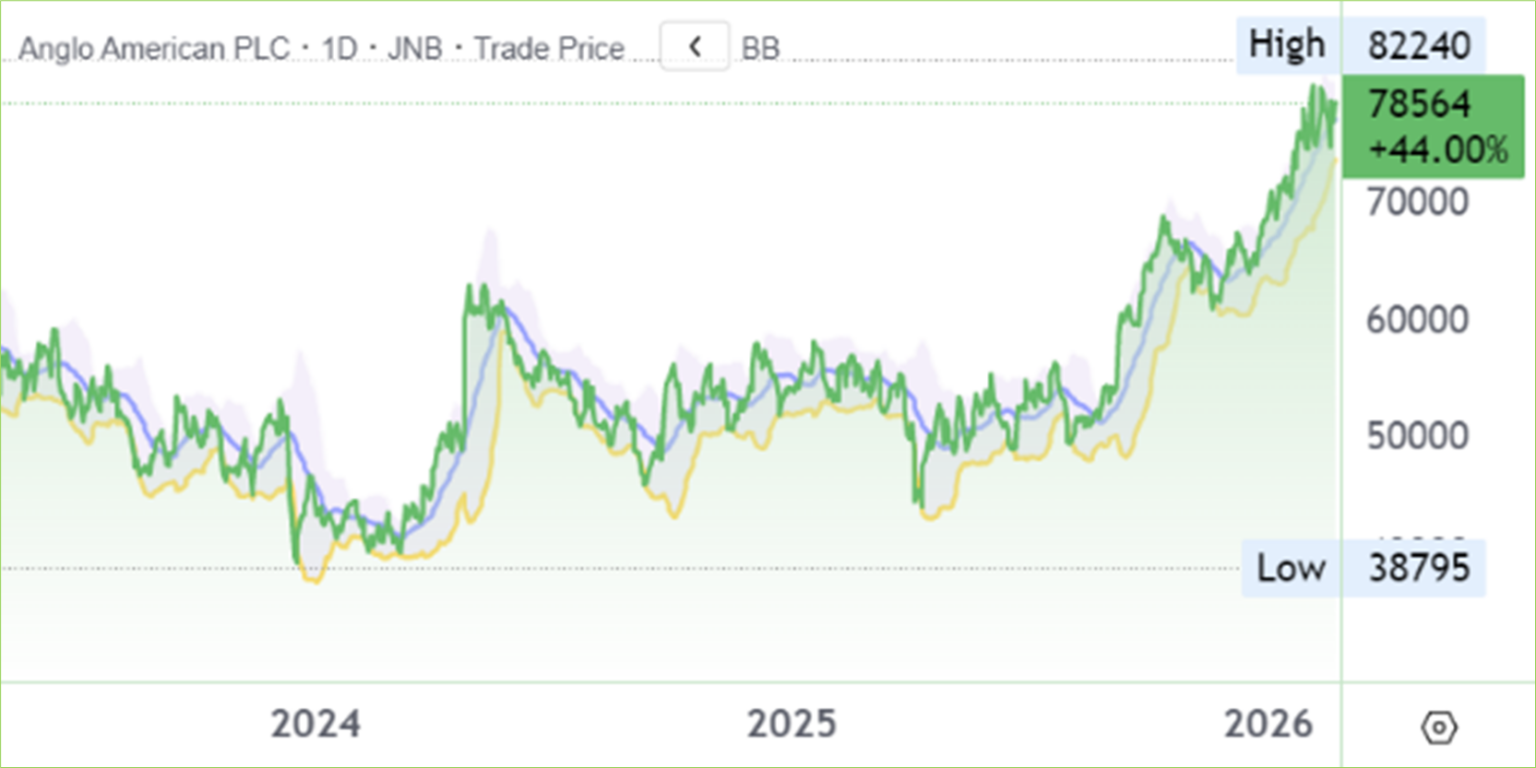
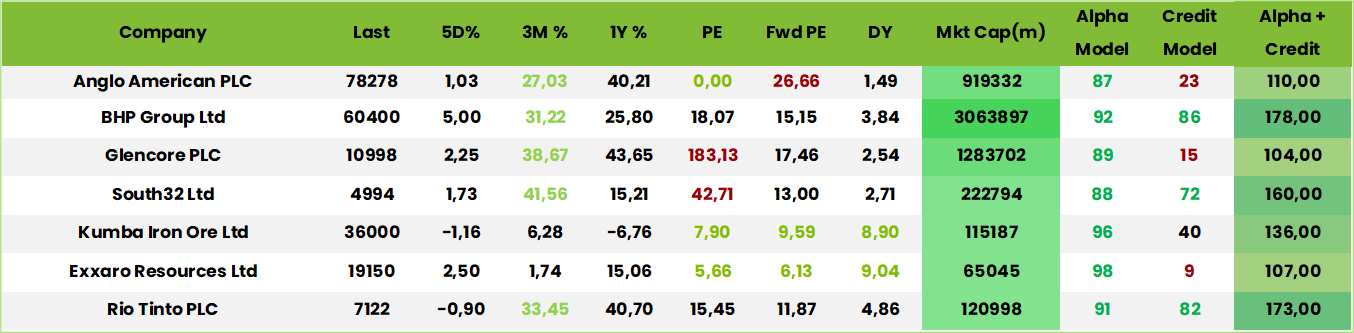
Anglo American (AGL) Preliminary Results FY25 (76194c)
HEPS: 80c (-28% from 111c FY24)
EPS: -330c (-30% from -253c FY24)
Operating Profit: $6.4bn (+2% from $6.3bn FY24)
Revenue: $18.5bn (+5% from $17.7bn FY24)
EBITDA: $6.4bn (+2% from $6.3bn FY24)
Dividend: 23c per share (Final dividend 16c, Interim dividend 7c)
EPS declined sharply due to impairments at De Beers, while HEPS remained positive. Revenue and EBITDA grew modestly, supported by strong Copper and Premium Iron Ore margins.
Portfolio optimisation and the merger agreement with Teck marked a transformational year, positioning Anglo American as a critical minerals powerhouse with over 70% copper exposure. Cost savings of $1.8bn were achieved, net debt reduced to $8.6bn, and strong operational performance in Copper and Iron Ore offset impairments at De Beers. Safety indicators improved, though two fatalities were recorded. “2025 was a transformational year as we progressed our portfolio simplification and set the course for the future by agreeing to merge with Teck, unlocking material value for shareholders.” – Duncan Wanblad, CEO.
Comment: simply put, copper contributed 62% of FY25 continuing ops ebitda, premium iron ore 45%, De Beers -8% and Other 1%. Iron ore will show little or no growth in production but will generate useful and steady cash flow. The crop nutrients are not quite on the horizon yet, but copper of course will loom large in the merged Anglo Tech entity. Copper warehouses around the world are bulging so the metal price could retrace somewhat but the prospect of a $4.5bn special dividend (c. ZAR 66 ps) makes holding worthwhile.
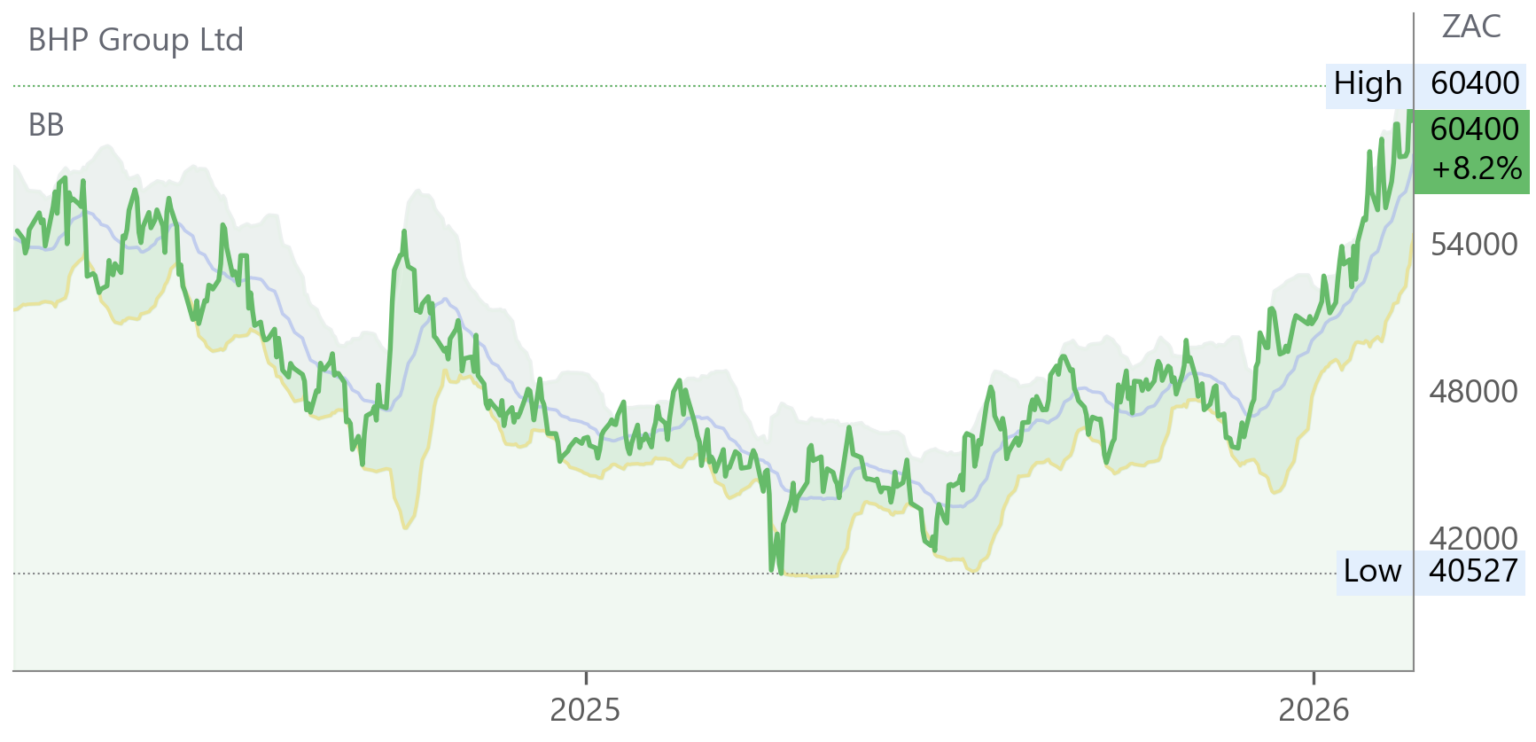
BHP Group (BHG) Interim Results for 6M Dec 25 (60400c)
HEPS: 112.0 USc (+30% from 86.3 USc)
EPS: 111.1 USc (+28% from 87.1 USc)
Revenue: US$27,9bn (+11% from US$25,2bn)
Dividend: 73 USc per share (interim, +46% from 50 USc)
Revenue grew 11% on stronger iron ore and copper volumes, while EPS and HEPS rose nearly 30% on improved pricing and cost discipline. Net impairments were minimal compared to the prior period, supporting earnings recovery. The interim dividend was increased to 73 USc per share, fully franked for Australian tax purposes, with the Dividend Reinvestment Plan in operation. “BHP continues to deliver strong returns, underpinned by operational excellence and disciplined capital allocation.” – Mike Henry, CEO. A long-term silver streaming agreement was announced with Wheaton Precious Metals, unlocking US$4.3bn upfront from its 33.75% share of Antamina mine silver output. The deal, effective 1 Apr ’26, is the largest streaming transaction to date. CEO Mike Henry said it “further unlocks additional value from the asset in an innovative and disciplined way.”
Comment: these results were above consensus expectations and copper for the first time is the largest contributor to Ebitda at c. 51% (up from 10% in FY21) with iron ore at c.48%. The giant Jansen potash project in Canada is an outlier in terms of BHP’s project execution record but is due to commence production in 18 months’ time targeting 10% of global production. Copper production has grown 30% over the last 5 years and is forecast to grow at a CAGR of 3 to 4% to 2035. The only fly in the ointment is that the outlook for iron ore is decidedly questionable as noted below, and BHP does not have the lump ore premium that Kumba enjoys. Best wait a while before adding.
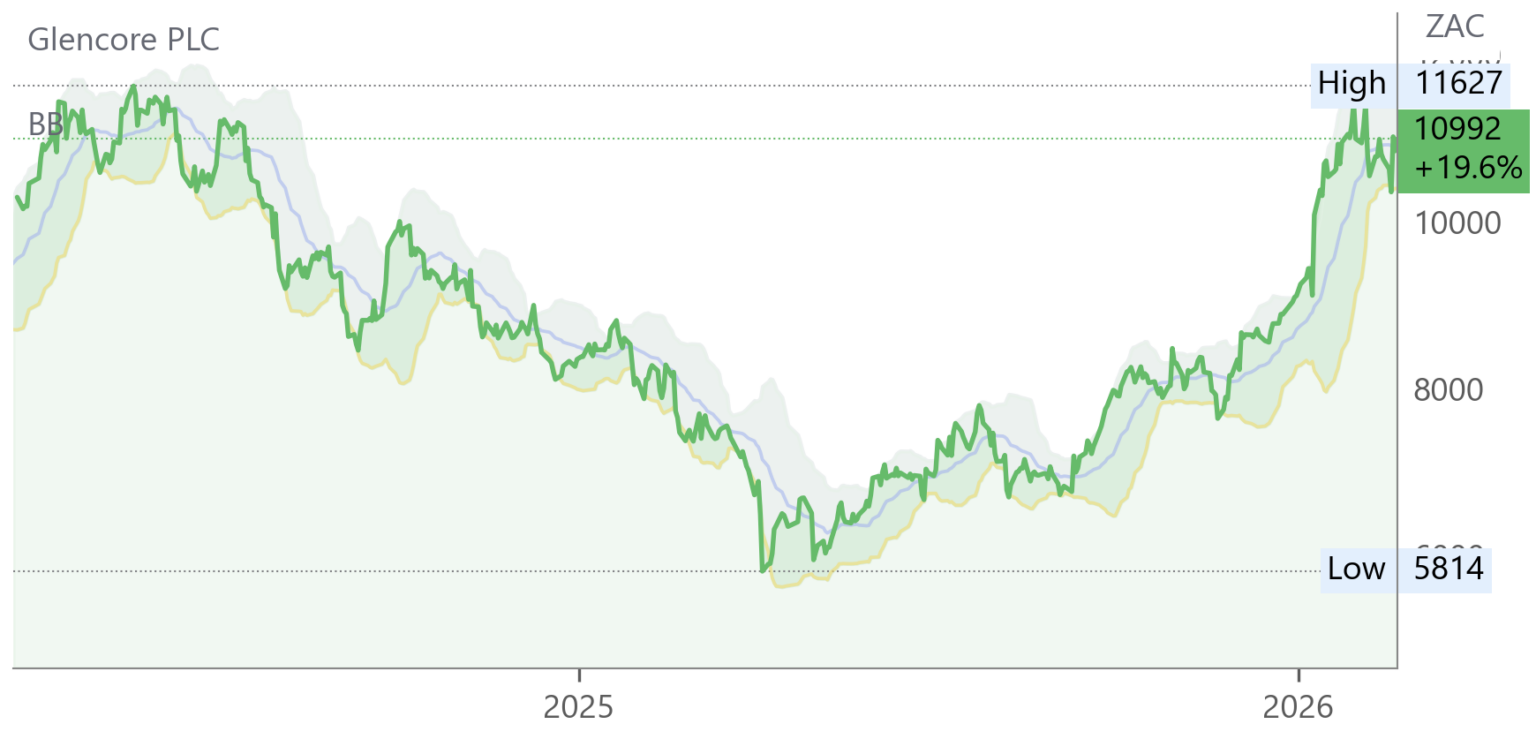
Glencore (GLN) Preliminary Results FY25 (10992c)
HEPS: 3 USc (+123% from -13 USc)
EPS: 3 USc (+123% from -13 USc)
Operating Profit: US$5,978m (-14% from US$6,938m)
Revenue: US$247,535m (+7% from US$230,944m)
EBITDA: US$13,511m (-6% from US$14,358m)
Dividend: 17UScps (base 10cps + top-up 7cps, payable Jun & Sep ’26)
Revenue rose 7% to US$247,5bn, supported by stronger metals pricing. Adjusted EBITDA fell 6% to US$13,5bn, though H2 surged 49% versus H1, reflecting copper-led growth. Net income recovered to US$363m (FY24: -US$1,634m). Cash generation remained robust at US$10,6bn, with net debt stable at US$11,2bn.
Glencore’s FY25 profitability was negatively impacted by weaker energy and steelmaking coal prices, which eroded margins despite stronger metals performance. Adjusted EBITDA fell 6% to US$13.5bn, EBIT dropped 14% to US$5.98bn, and marketing EBIT declined 8% to US$2.9bn, reflecting softer industrial results and reduced cash generation.
“2025 was a year of significant progress, marked by strong operational performance and clear momentum for our copper-led growth strategy.” – Gary Nagle, CEO.
Comment: despite EPS of only 3USc, the 17UScps payment will be underpinned by the Bunge NYSE shares listed as surplus capital and valued at $4.0bn on 9 February. At the Capital Markets Day in December, Glencore outlined, inter alia, how it would boost its own copper production by c 25% to 1mtpa by 2028 and then go on to become one of the biggest copper producers in the world.
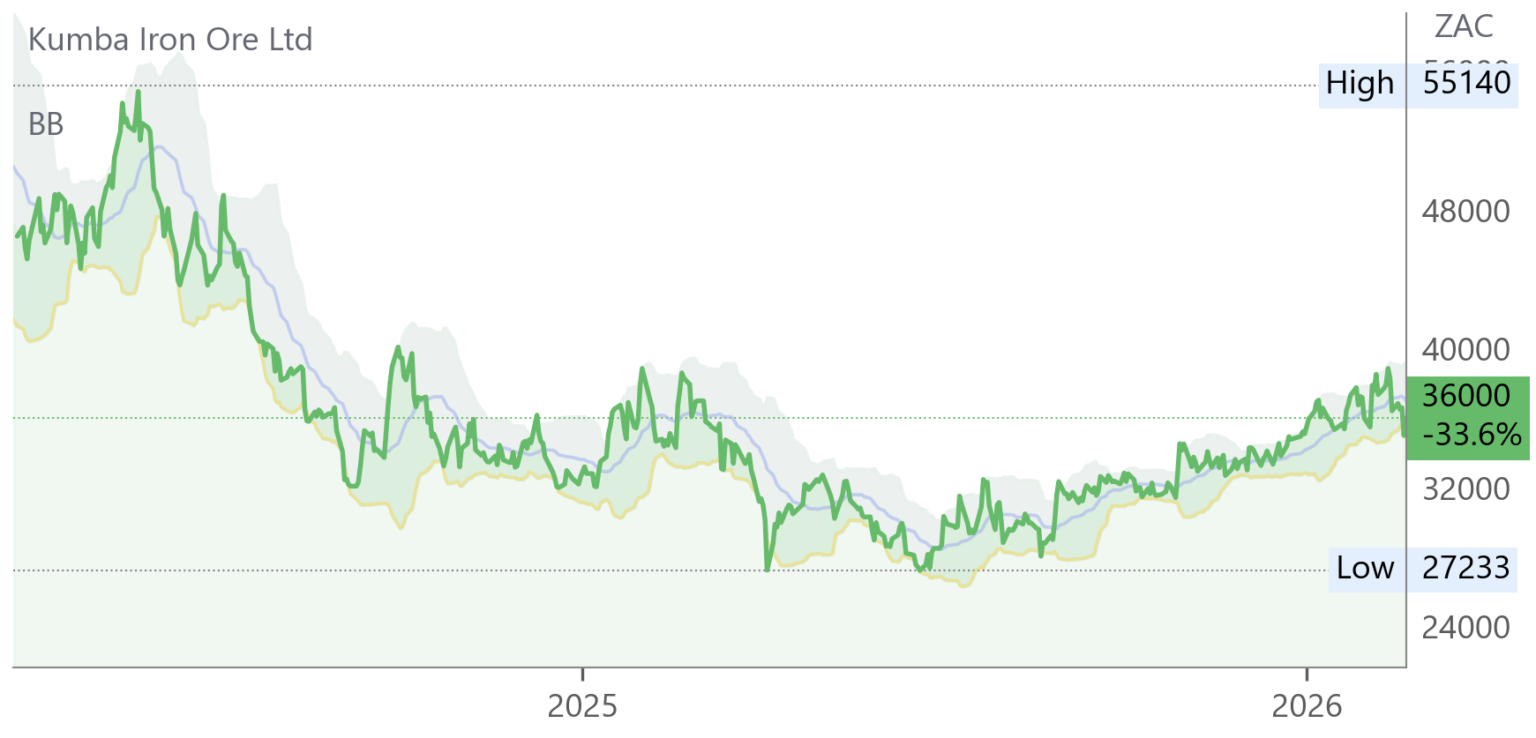
Kumba (KIO) Financial Results FY25 (36000c)
HEPS: 4597c (+18% from 3894c)
EPS: 4557c (-1% from 4581c)
Operating Profit: R31.9bn (+6% from R30.1bn)
Revenue: R70.1bn (+2% from R68.5bn)
EBITDA: R31.9bn (+6% from R30.1bn)
Dividend: 1543cps final, 3203cps total (-17% from 3870cps)
Kumba delivered resilient results, supported by a 12% premium to benchmark iron ore prices and cost savings of R673m. EBITDA margin improved to 46%, while free cash flow fell 17% to R12bn. Net cash closed at R14.9bn, enabling a 70% payout ratio. “Kumba delivered a solid performance, marked by improved realised price, marginal sales growth and disciplined capital allocation.” – Mpumi Zikalala, CEO.
Comment: in the S&P Global Metals Outlook 2026 iron ore prices are expected to trend lower as new supply enters the market particularly from Simandou in Guinea. Kumba management is, however, adamant that the outlook for lump premium ore, which comprises two thirds of its output, is positive. So much so that the premium of its lump ore over standard iron ore, which averaged $80/t last year, is likely to move up from $9/t to $15/t. Management is also pleased with the progress, at a practical level, of the Ore Users Forum in facilitating increased deliveries by Transnet – While production growth prospects are limited, Kumba can safely be Held for yield.
Sibanye Stillwater (SSW) Financial Results FY25 (6308c)
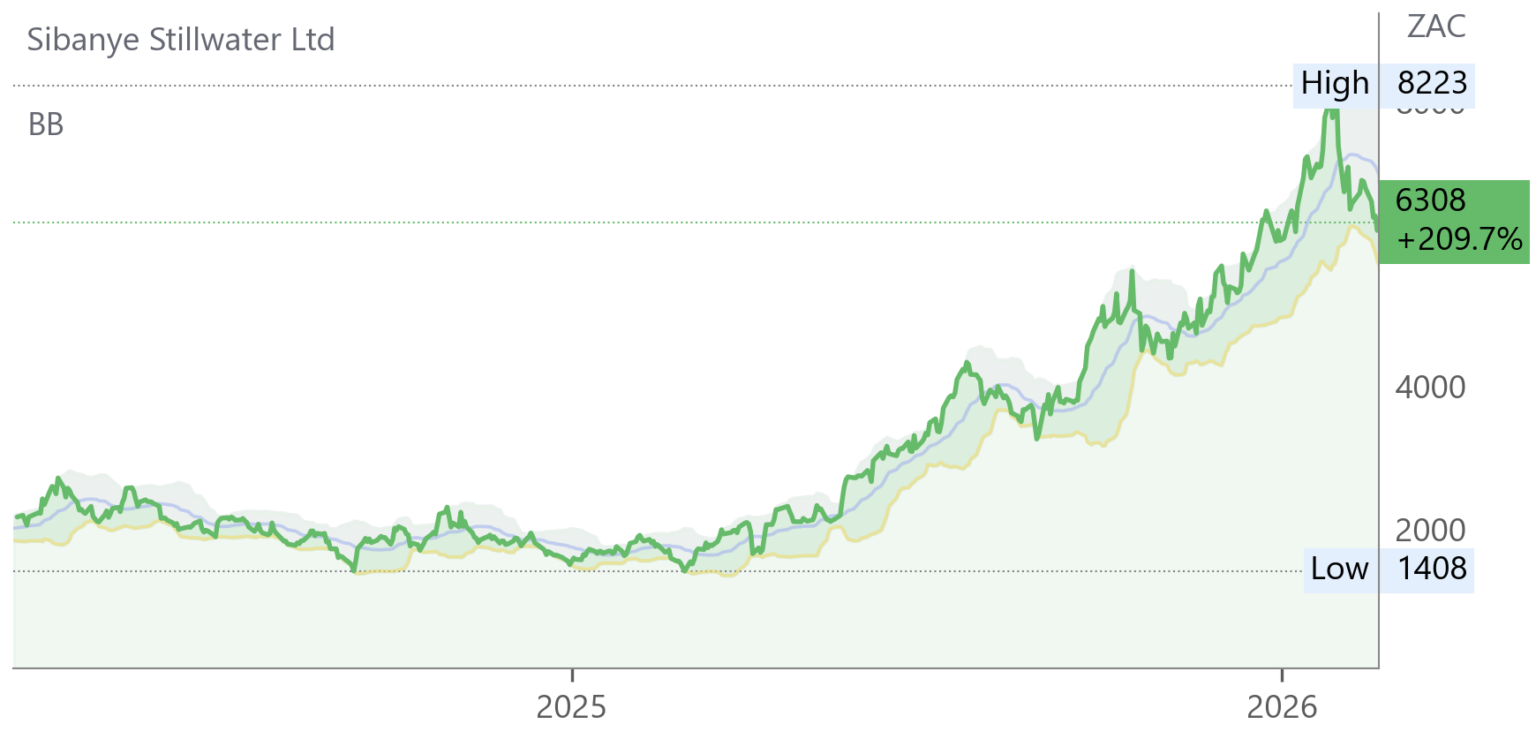
HEPS: 244c (+277% from 64c FY24)
EPS: -183c (improved from -258c FY24)
Operating Profit: R6.9bn (+349% from R1.5bn FY24)
Revenue: R129.7bn (+16% from R112.1bn FY24)
Gross Profit: R37.8bn (+189% from R13.1bn FY24)
EBITDA: R37.8bn (+189% from R13.1bn FY24)
Dividend: 131c per share (Final dividend)
Explanation: HEPS surged while EPS remained negative due to impairments. EBITDA and Gross Profit rose sharply, driven by higher commodity prices and operational improvements.
Operational resilience and favourable commodity prices lifted earnings, with PGMs and gold operations delivering strong cash flows. Renewable energy initiatives saved R93m and avoided 316,440t CO₂ emissions, reinforcing sustainability leadership. The Keliber lithium project advanced, with first mining in Feb ’26. Legal settlements and restructuring stabilised operations, while US PGM and Recycling segments returned to profitability. “With sustained higher commodity prices, disciplined capital allocation and improving operational stability, we expect continued improvement in earnings and balance-sheet resilience, providing a solid foundation as the Group enters 2026.” – Richard Stewart, CEO.
Comment: while the adventurous M&A of the former CEO may remain to some extent in the company DNA, his successor, Richard Stewart, is prioritising development and value extraction from the very real potential of its varied portfolio. Meanwhile, for context, SA PGMs contributed 51% to 2H25 Ebitda, US underground PGMs 7.2% and SA gold 33%. This is of course a moving feast with, for example, the imminent closure of Kloof, startup at Keliber and, possibly go ahead on Burnstone Gold. The stock has re-priced enough for now.
Pan African Resources (PAN) Interim Results for 6M Dec 25 (3619c)
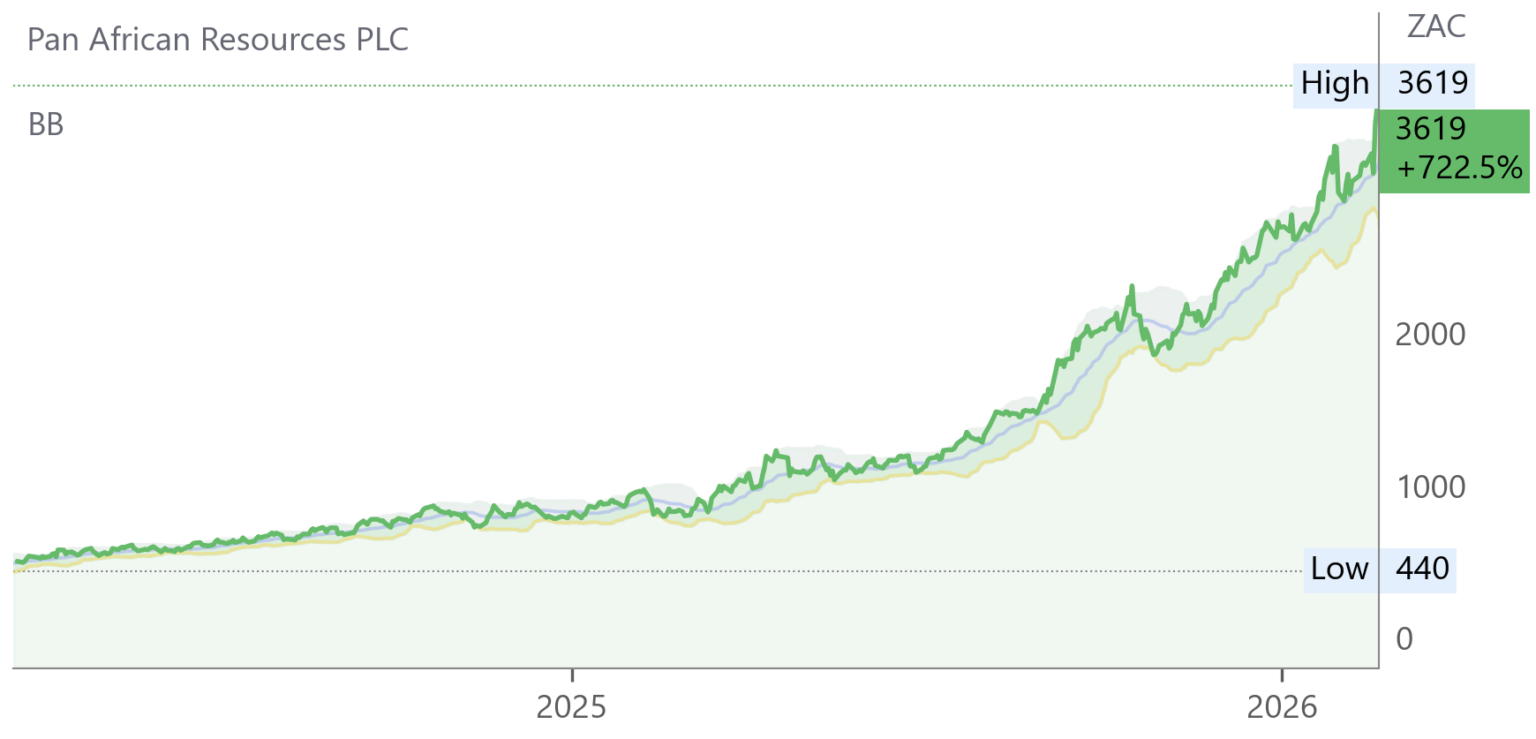
HEPS: US 7.34c (+512% from US 1.20c)
EPS: US 7.30c (+192% from US 2.50c)
Operating Profit: US$147.8m (+212% from US$47.4m)
Revenue: US$487.1m (+157% from US$189.3m)
EBITDA: US$245.2m (+323% from US$58.0m)
Dividend: 12cps interim (gross)
Production growth across Barberton, Elikhulu, Evander and Tennant Mines lifted revenue 157% and EBITDA 323%, driving a record profit. HEPS surged over 500%, supported by higher gold prices and operational improvements. AISC rose to US$1,874/oz, impacted by forex, share-based payments, and third-party material costs, though 88% of output delivered at US$1,700/oz. Net debt fell 69% to US$46.2m, with a net cash position expected by Feb ’26.
Tennant Mines will double output to ~30Koz in H2 as higher-grade ore replaces stockpile feed, with long-term plans targeting 100Koz gold and 10–15Kt copper annually. Soweto Cluster feasibility could add 30–35Koz per year for 15 years. Royal Sheba and Poplar projects provide scalable, low-capex expansion opportunities, supporting sustainable growth.
“Pan African’s safety, operational and financial performance, together with record gold prices, has positioned us to deliver outstanding results for the full year.” – Cobus Loots, CEO. Comment: with the current gold price around $5000/oz looking like it could easily average more than $1000/oz higher than the $3812/oz received for 1H FY06/26 and 2H production headed for around 152koz, well above the 128koz in 1H 26, it is no wonder CEO Kobus Loots is confident of growing dividends as well as easily managing the capex in the numerous organic growth projects in the group. Foremost among these is Tennant’s Warrego gold and copper project in Australia’s Northern Territory as noted above. Then there is the Soweto Tailings Retreatment Project with, at $3500oz, an IRR of 40.2% and a 2 year payback. Together with expansion at the other operations, including at Barberton, the oldest gold mine in SA, Pan African is uniquely positioned to grow production and dividend payments with its current portfolio and as such warrants serious consideration by investors still underweight gold.
Gold Fields (GFI) Financial Results FY25 (85750c)
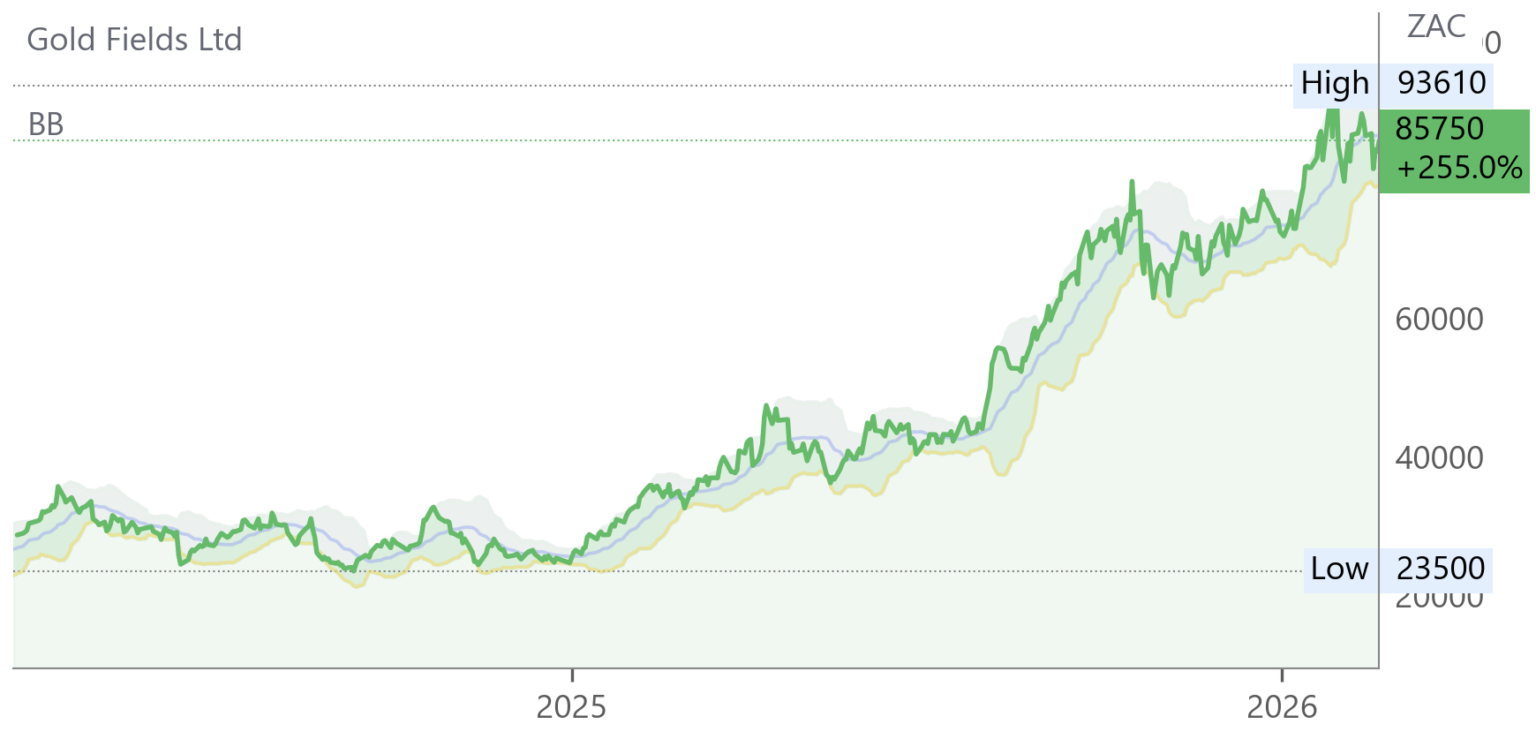
HEPS: US 288c (+116% from US 133c)
EPS: US 399c (+187% from US 139c)
Operating Profit: Not disclosed
Revenue: US$3,496/oz (+45% from US$2,418/oz)
Dividend: 1,850cps final + 450cps special (total 2,550cps, +155% from 1,000cps)
Gold Fields delivered record attributable profit of US$3.57bn, up 186% year-on-year, supported by higher gold-equivalent production (2.44Moz) and stronger realised prices. AISC rose slightly to US$1,645/oz, but margins expanded significantly. Net debt fell to US$1.44bn, with adjusted free cash flow surging to US$2.97bn. Shareholder returns totalled US$1.7bn, equating to 54% of free cash flow. “2025 marked a year of exceptional delivery, with strong cash generation enabling enhanced returns to shareholders.” – MJ Fraser, CEO.
Comment: Goldfields is sticking to its 5-year plan outlined in its Capital Markets Day in November with a 5% CAGR in gold production of between 2.3-2.5moz in FY25 to 2.6-2.9moz in FY29. The record Headline earnings of $2.57bn (FY 25: $1.19bn) have, however, prompted a total distribution of $1.7bn amounting to 54% of adjusted Free Cash Flow of R2.58bn (FY24: $0.61bn). This includes $100m in share buybacks which Goldfields’ North American shareholders prefer. South Deep, the only South African operation, is one of 9 mines and one project in 6 countries which Goldfields considers to be Tier One jurisdictions. Although there is some concern regarding the Ghanaian government talk of a 10 % royalty, CEO Mike Fraser says it is taking a pragmatic attitude (unlike ideologically driven SA politicians) in discussion so far. The stock can safely be held by investors wanting a globally balanced gold mining portfolio with steady growth prospects.
DRDGOLD (DRD) Interim Results for 6M Dec 25 (5795c)
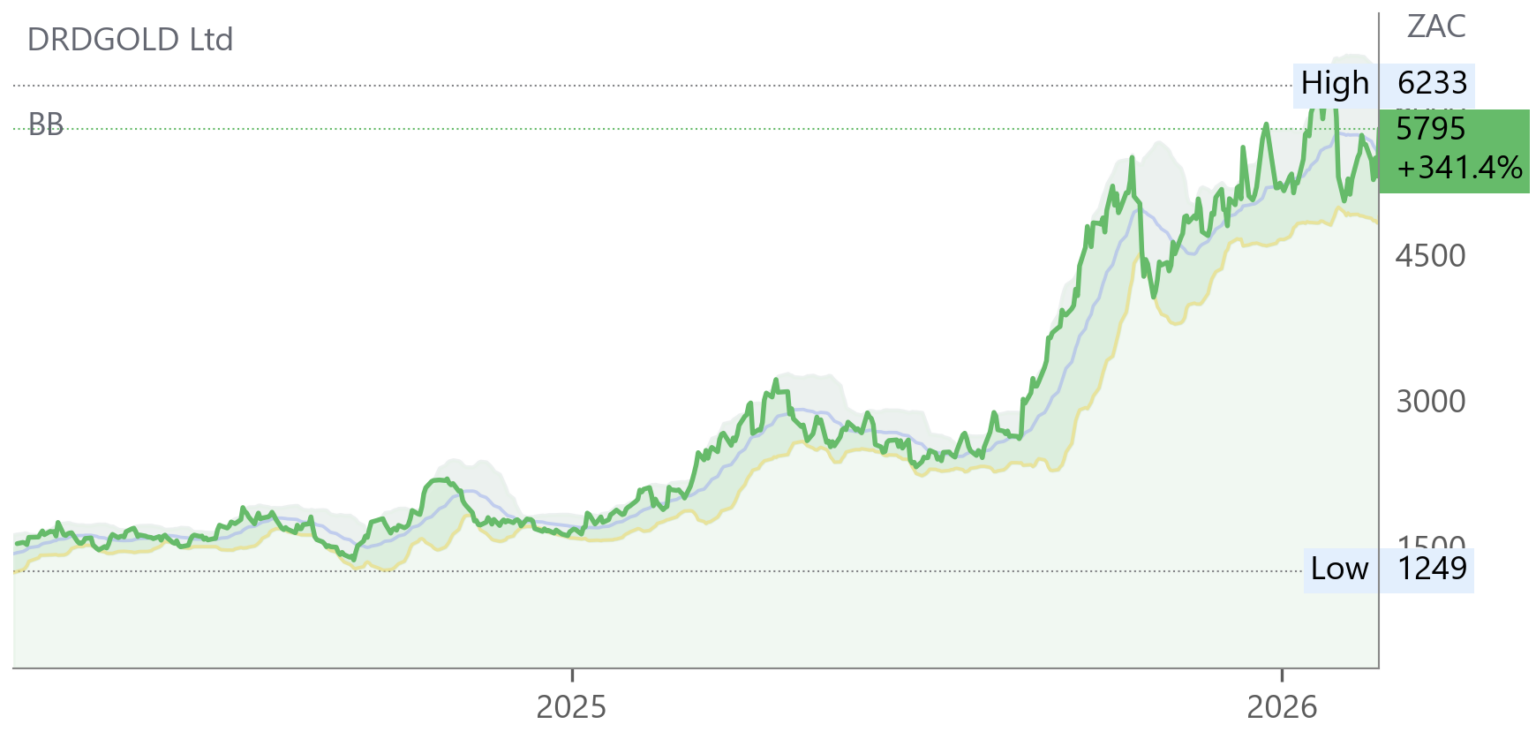
HEPS: 223.2c (+98% from 112.6c)
EPS: 222.7c (+98% from 112.6c)
Operating Profit: R2,712.8m (+72% from R1,578.7m)
Revenue: R5,053.2m (+33% from R3,802.3m)
Gross Profit: R2,461.8m (+88% from R1,311.9m)
Dividend: 50cps interim (+67% from 30cps)
Revenue rose 33% on a 43% higher rand gold price, offsetting a 9% drop in production. Operating profit surged 72%, with margins expanding to 53.7%. HEPS nearly doubled, supported by strong cash generation (R793m inflow). AISC increased 14% to R1,094,188/kg, but margins widened to 48%. Beyond day‑to‑day operations, DRDGOLD is investing heavily in Vision 2028, a strategic reinvestment programme aimed at sustaining long‑term growth. Projects include new reclamation sites, technology upgrades, and environmental rehabilitation initiatives. Management emphasises reinvestment funded entirely from operating cashflows, ensuring balance sheet strength. Expansion opportunities are being explored to extend life‑of‑mine, positioning DRDGOLD for continued growth in a high‑price gold environment.
“Record gold prices enabled us to fund Vision 2028 reinvestments entirely from operating cashflows.” – Niël Pretorius, CEO.
Comment: the four times covered (up from 3.7x in 1H) dividend will help ensure that Vision 2028 is implemented ahead of the next slump in the gold price. So, whereas this very unusual gold producer is already way beyond many earlier expected “close down by” dates it could well be operating beyond 2040. In addition to seeking to assist other producers with its rehabilitation skills, its harnessing of renewable energy is substantially reducing its Eskom bill. Then there will the 1000 hectares of land in the vicinity of Nasrec that will become available for redevelopment in due course. So, for investors who want a gold producer that is helping restore the environment rather than digging into it, DRD warrants serious consideration!

Mondi (MNP) Financial Results FY25 (20229c)
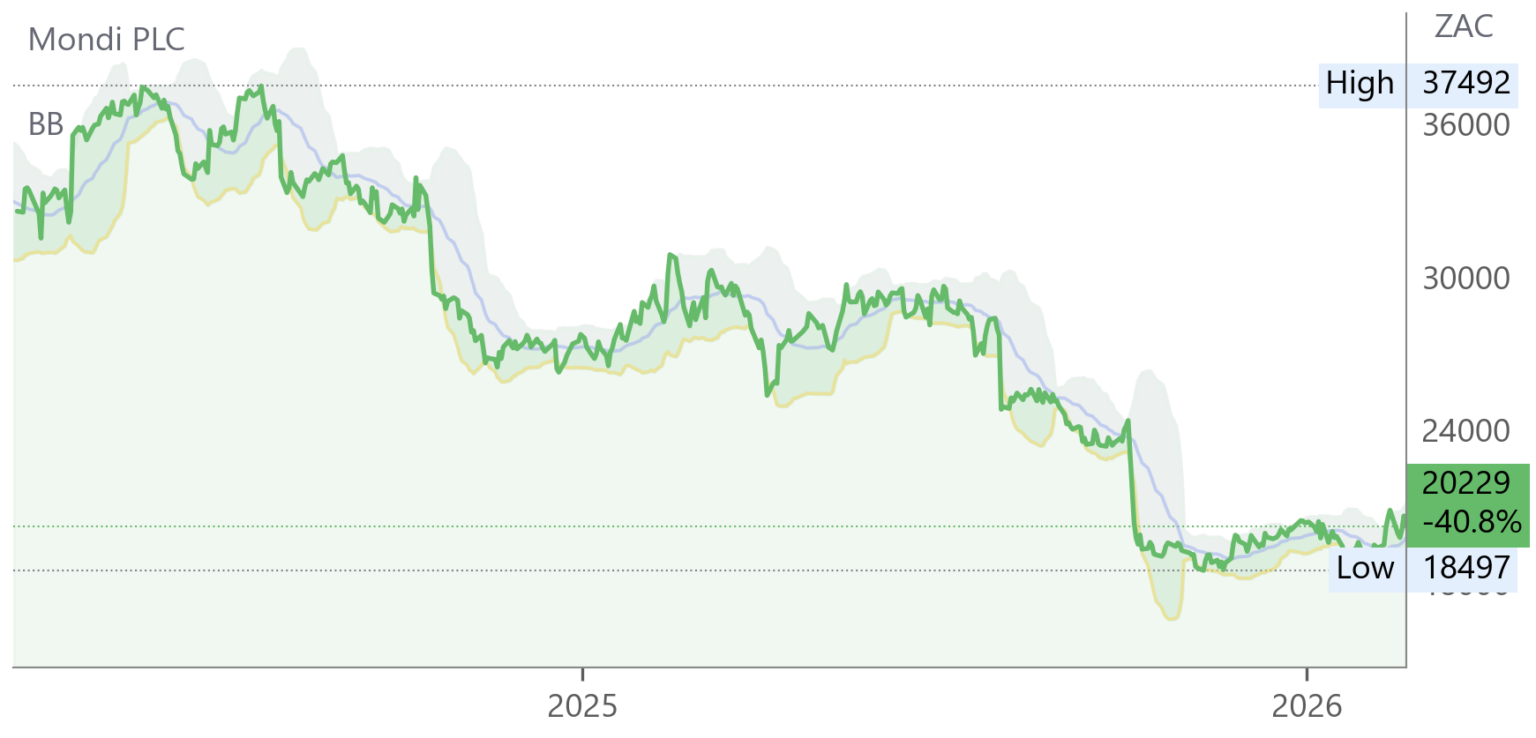
HEPS: 48.1 euroc (↓21% from 60.8 euroc)
EPS: 37.4 euroc (↓24% from 49.1 euroc)
Operating Profit: €269m (↓29% from €378m)
Revenue: €7,663m (↑3% from €7,416m)
EBITDA: €1,001m (↓5% from €1,049m)
Dividend: 28.25 euroc per share (final dividend 4.92 euroc payable 7 May ’26, interim 23.33 euroc paid 26 Sep ’25)
Explanation: EPS fell 24% while HEPS dropped 21%, a difference >30%. EBITDA declined 5% despite revenue growth, reflecting margin pressure from lower paper prices and restructuring costs. Operating profit fell sharply (↓29%) due to cyclical downturn and cost optimisation measures.
Mondi navigated a prolonged cyclical downturn with resilient results, supported by cost discipline, operational synergies from integrating Corrugated Packaging and Uncoated Fine Paper, and the acquisition of Schumacher. Plant closures and capital allocation shifts towards maintenance and optimisation strengthened liquidity. Cash generation improved, though margins compressed. Andrew King, CEO, stated: “Mondi is strongly positioned to capture the upside as market conditions improve. Our innovative packaging and paper solutions, cost advantaged and integrated assets, and disciplined approach to capital allocation position the Group well to deliver long-term value for our shareholders.” – Andrew King, Group CEO.
Comment: we agree but believe there is no need to anticipate the turnaround in market conditions just yet.

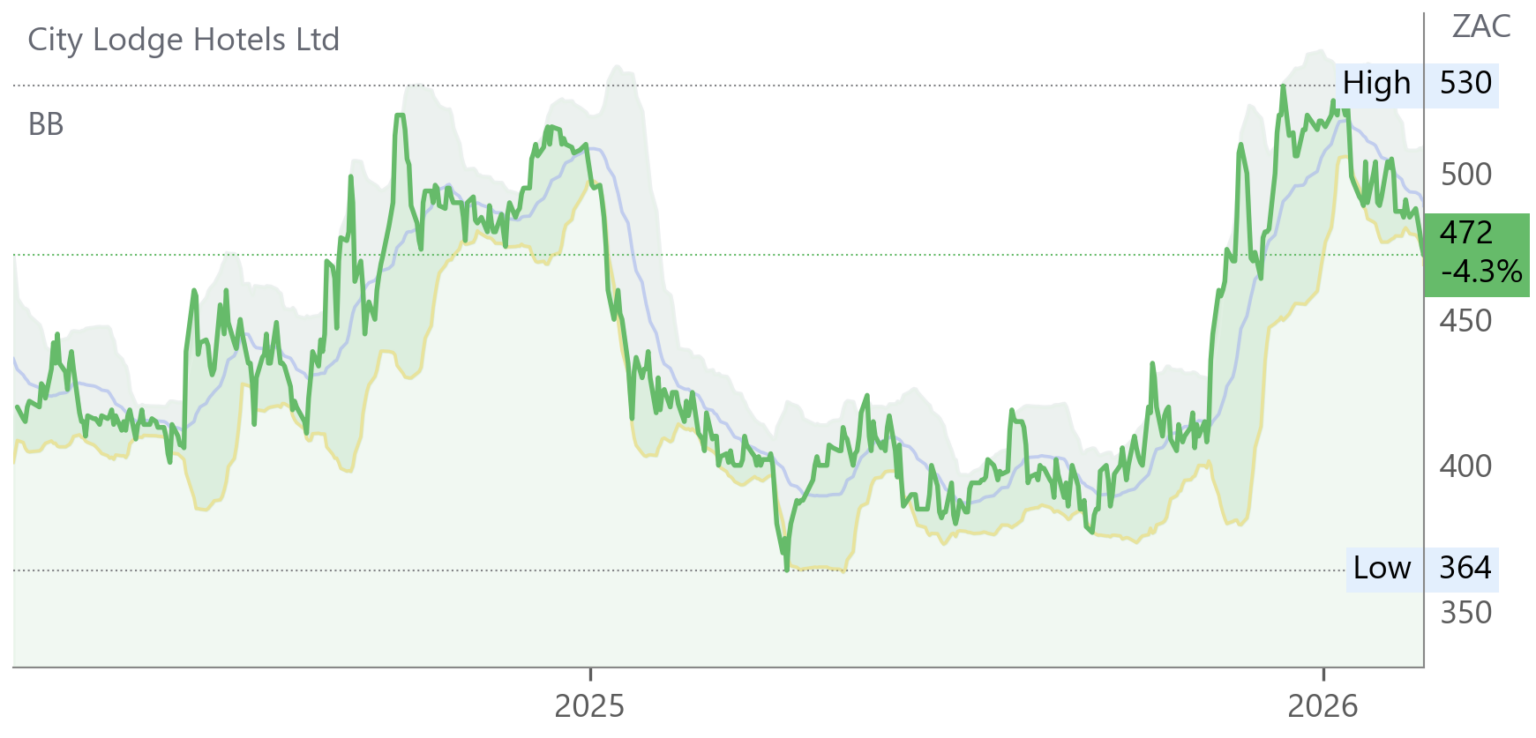
City Lodge (CLH) Interim Results for 6M Dec ’25 (472c)
HEPS: 21.5c (↓0.5% from 21.6c)
EPS: 21.5c (↓0.5% from 21.6c)
Operating Profit: R114.6m (↓5% from R120.4m)
Revenue: R1.14bn (↑12% from R1.02bn)
EBITDA (EBITDAR): R371m (↑16% from R319m)
Dividend: 8c per share (interim dividend, ↑33% from 6c)
Adjusted HEPS rose 33% due to exclusion of forex losses. Revenue grew 12% with occupancy at 61.6%, the highest since pre-Covid. EBITDA rose 16% on strong cost control.
City Lodge noted improved occupancy and strong food & beverage growth, supported by refurbishments and yield management initiatives. Cash generation rose 39% to R347m, funding reinvestment in resilience and sustainability projects. Share buybacks reduced shares in issue, enhancing adjusted headline earnings. Strategic portfolio optimisation included closing loss-making hotels and expanding Waterfall City. Andrew Widegger, CEO, stated: “We expect the positive momentum over the last two weeks to continue over the balance of the financial year.” Comment: pushing the occupancy rate above 60% is indeed significant as this benchmark, which is closely watched by investors, has eluded it for many years. The big question is whether this is a sign that the economy is indeed turning up or just a fillip from the G20 and B20 plus the holiday season. CEO Andrew Widdeger would also have us believe that it is due to the many improvements in terms of refreshed menus and layout improvements aimed at attracting customers other than its traditional appeal to the “commercial traveller”. Perhaps we should wait until the FY26 finals to see whether these changes and improved occupancy benefit the bottom line which it hasn’t done yet.

Trading Statements & Updates
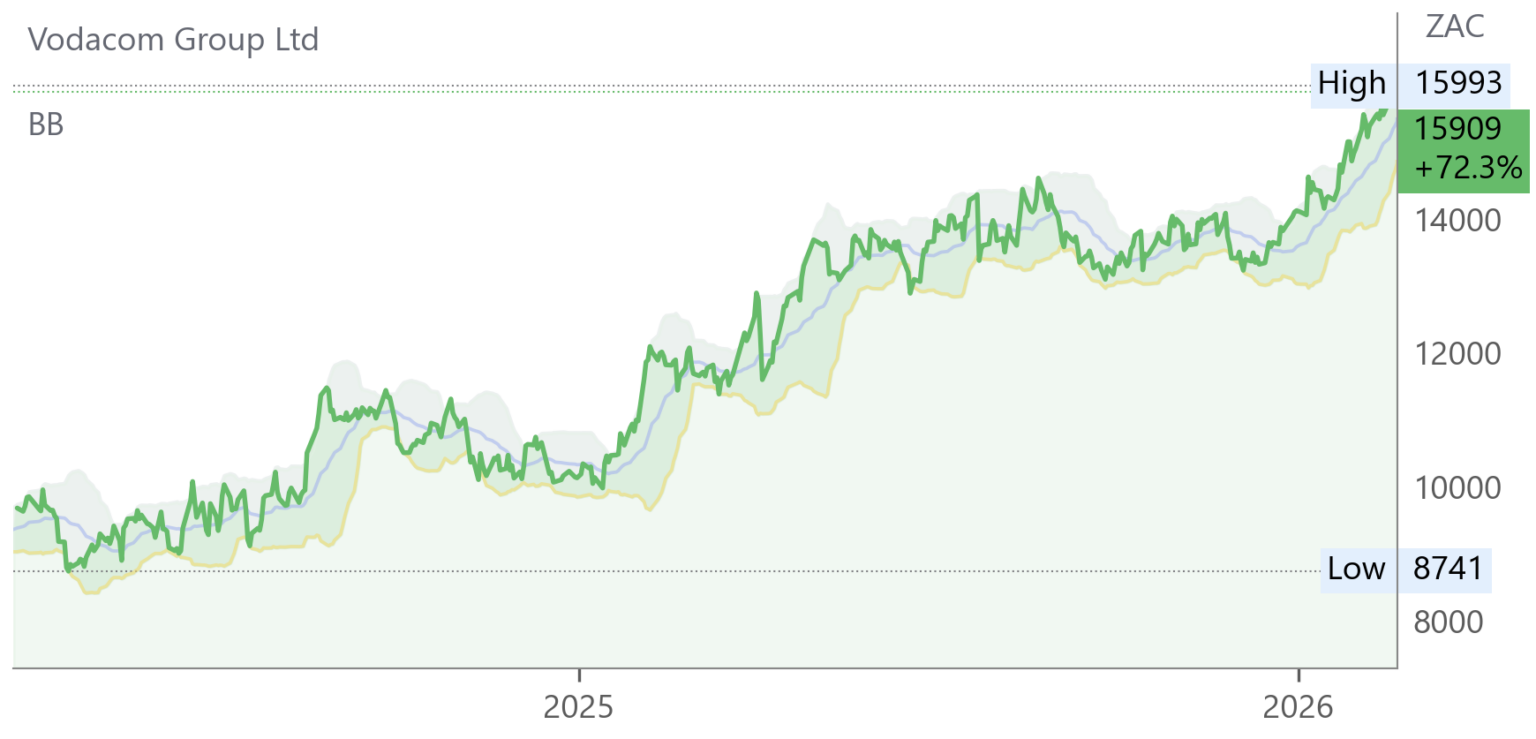
Vodacom (VOD) Trading Update for Q3 Dec 25 (15909c)
Group Revenue: R43.9bn (+11.0% YoY, +11.7%* normalised)
Group Service Revenue: R34.6bn (+12.7% YoY, +13.6%* normalised)
South Africa Service Revenue: R16.4bn (+1.4% YoY)
Egypt Service Revenue: R9.5bn (+39.0% YoY)
International Service Revenue: R8.8bn (+12.6% YoY, +15.4%* normalised)
Financial Services Revenue: R4.5bn (+24.7% YoY, +26.1%* normalised)
Mobile Money Transactions: US$500.7bn over 12 months
Vodacom’s growth driven by Egypt’s 39% service revenue increase and strong international momentum, while South Africa saw modest gains. Key milestones: ICASA approval for Maziv fibre stake, increased Safaricom shareholding to 55%, and financial services growth of 24.7% to R4.5bn. Vodacom committed US$350m to secure Egypt spectrum, strengthening Vodafone Egypt’s position and supporting data demand. “Vodacom made significant strategic progress, strengthening long-term growth and accelerating inclusive connectivity.” – Shameel Joosub, Group CEO.
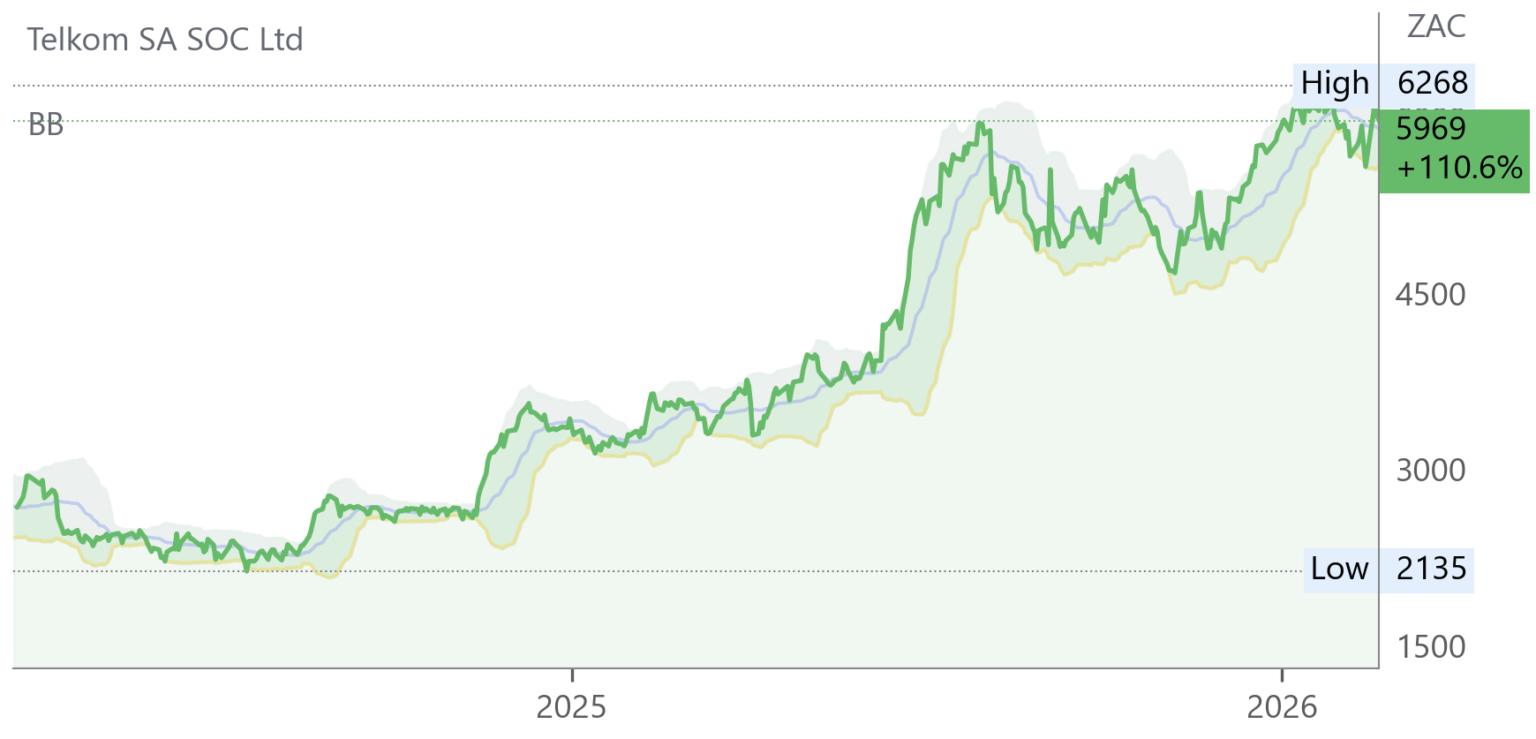
Telkom (TKG) Trading Update Q3 FY26 (5969c)
Revenue: R11,13bn (+1.3% YoY; YTD R33,24bn, +2.7%)
EBITDA: R3,24bn (+8.4% YoY; margin 29.1%)
Data revenue rose 9.6% to R6,86bn, contributing 60% of group revenue. Mobile subscribers grew 5.3% to 25,3m, with prepaid up 5.8% to 22,2m. Fibre homes passed reached 1,5m, with 786k connected at a 52.4% connectivity rate. BCX revenue fell 9.3% amid weak enterprise spend, while Openserve grew 2.2% on fibre monetisation. Capex intensity was 11.7%, focused on mobile and fibre expansion. “The disciplined execution of our data-led strategy delivered quality data revenue growth… This demonstrates our strength as South Africa’s digital backbone.” – Serame Taukobong, Group CEO.
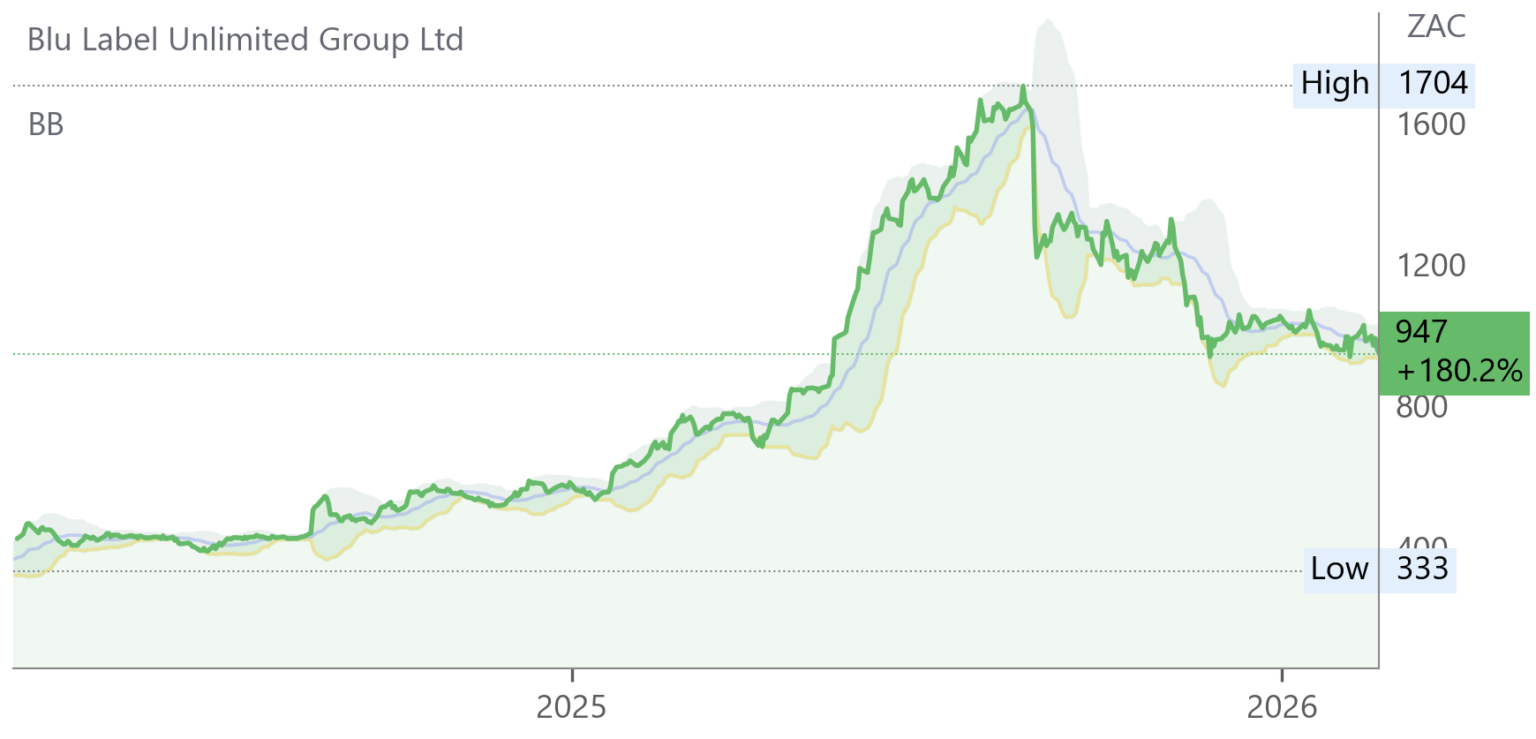
Blu Label (BLU) Trading Statement for 6M Nov ’25 (947c)
HEPS: 37.68–39.52c (↓18%–14% from 46.01c)
EPS: (556.44c) – (554.68c) (↓>100% from 43.98c)
Operating Profit: R535m (underlying, excl. Cell C/CEC)
Revenue: R5bn (underlying, excl. Cell C/CEC)
Gross Profit: R1.353bn (underlying, excl. Cell C/CEC)
EBITDA: R535m (underlying, excl. Cell C/CEC)
EPS collapsed due to a R5.2bn net loss from Cell C restructuring and disposal, while HEPS fell 14–18%. Underlying EBITDA and revenue remained resilient. Excluding Cell C and CEC, operations delivered R5bn revenue and R535m EBITDA, supported by strong prepaid services and voucher sales. The Competition Commission approved TPC’s acquisition of Cell C in Sep ’25, followed by Cell C’s listing and Blu Label’s disposal of its majority stake, retaining 49.47% as an associate. Despite headline earnings pressure, core operations demonstrated stability. Results due 25 Feb ’26.

Jubilee (JBL) Operational and Projects Update H1 FY26 (92c)
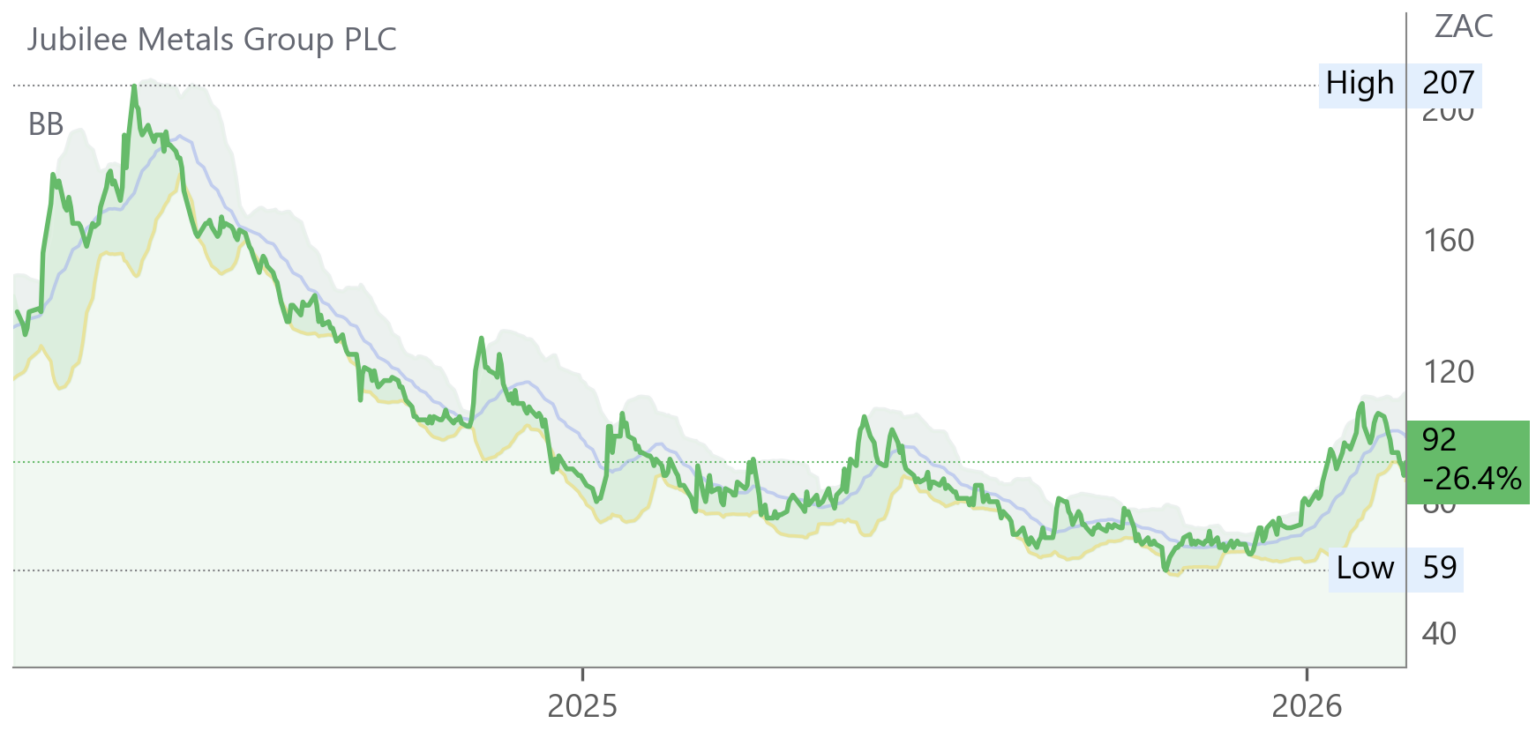
Roan operations achieved targeted 30,000tpm feed rate despite rains, producing 1,246t Cu units (+173% YoY). Molefe mined 181,890t reef, dispatching 9,130t to Sable Refinery at 1.84% Cu grade. Copper output rose 9% to 1,543t, with FY26 guidance of 4,500–5,100t. A 240Mt Large Waste Project resource review confirmed scale, with partner selection expected by FY26 year-end. Chrome concentrate reached 804,227t and PGMs 18,733oz, while South African chrome/PGM operations were sold for US$25m. “Roan’s operational performance is particularly pleasing, reaching targets on the back of stable power and improved efficiencies.” – Leon Coetzer, CEO.
Snippets
MTN (MTN) agreed to acquire the remaining 75.3% of IHS (a pan-African telecoms tower operator, providing shared infrastructure solutions to mobile network operators) at US$8.50 per share, valuing the deal at US$2.2bn cash. The transaction excludes Latin American assets, focusing solely on IHS’ African towers, valued at ~US$4.8bn. Funded equally by IHS’ cash and MTN liquidity, the deal is net income and cash flow accretive, with IHS set to delist from NYSE.
Araxi (AXX) formerly Capital Appreciation, will acquire 80% of Pay@ and IPHL for R1bn via subsidiary African Resonance. Funded by R200m cash and R800m debt, the deal secures full South African ownership of Pay@, which processed R60bn transactions in the past year. The acquisition strengthens Araxi’s payments division, expanding reach across Southern Africa and enhancing fintech capabilities.
Merafe (MRF) confirmed that its Lion Smelter in Steelpoort achieved first ferrochrome production on 16 Feb ’26 after recommissioning 50% of capacity. NERSA approved a 12‑month interim tariff of 87.74c/kWh, enabling full operations by 31 Mar ’26. However, long‑term sustainability requires 62c/kWh. Boshoek and Wonderkop remain at risk, with consultations due by 28 Feb ’26.
Bidvest (BVT) confirmed termination of its agreement to sell Bidvest Bank to Access Bank plc after conditions precedent were not met. The disposal process has been relaunched, with Bidvest continuing to support the bank, which remains well-capitalised. Separately, Bidvest concluded an agreement to sell Bidvest Life to a private equity-led consortium, subject to regulatory approvals.
Sirius Real Estate (SRE) announced a £75m capital raise, plus a £2m retail offer, to fund two German acquisitions worth ~€130m, focused on defence-related tenants. The assets carry a 7.6% yield and will be completed by Q2 ’26. CEO Andrew Coombs said: “This capital raise will allow us to execute further opportunities at attractive prices, strengthening our portfolio.”